
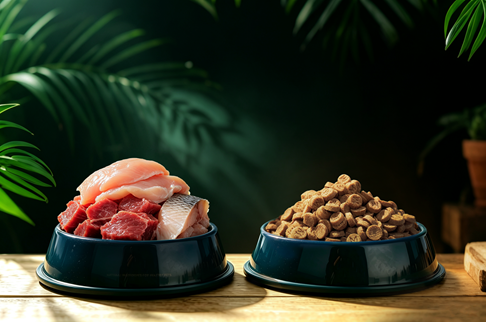

Most dry pet food looks broadly similar once it has been poured into a bowl. The way it was made, however, can differ considerably.
Extrusion is the most widely used manufacturing method for dry kibble, but baking is another approach to producing dry food for cats and dogs. Both methods involve cooking ingredients, although they use different equipment and processing conditions.
Understanding those differences can help when comparing products. It is equally important to understand what the cooking method alone cannot tell you about a food’s nutritional quality.
Baking and Extrusion: What’s the Difference?
In conventional extrusion, ingredients are mixed and processed using heat, moisture, pressure and mechanical action. The mixture is pushed through a die, cut into individual pieces and typically dried to achieve the desired final moisture content.
Baked pet food is generally made by preparing an ingredient mixture, forming it into pieces and cooking it in an oven. Depending on the recipe and manufacturing process, additional drying may be necessary.
The two methods can produce differences in density, texture and flavor. These characteristics are influenced by the ingredients themselves, as well as cooking temperature, processing time and moisture levels.
No single manufacturing method guarantees superior nutrition. The quality of a finished food depends on its formulation, the suitability of the processing conditions and how effectively those conditions are managed.
What Makes a Food Nutritionally Complete?
A complete diet must address a much wider range of nutritional requirements than its protein content alone might suggest.
Protein supplies amino acids needed for muscle maintenance, tissue repair and other essential functions. Fat provides concentrated energy, supplies essential fatty acids and helps with the absorption of fat-soluble vitamins. Minerals and vitamins are involved in processes ranging from bone development to normal metabolism.
These nutrients need to be present in appropriate amounts and proportions for the animal’s species and life stage.
Cats and dogs cannot simply share the same daily diet. Cats, for instance, have particular dietary requirements for nutrients such as taurine and preformed vitamin A. Growing animals also have nutritional needs that differ from those of healthy adults.
When choosing a daily food, look for a nutritional adequacy statement appropriate for your pet rather than relying solely on the cooking method, ingredient names or a high protein percentage.
The Pal’s Delight Complete Baked Food Collection
 |
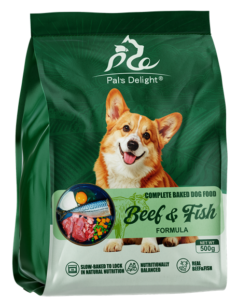 |
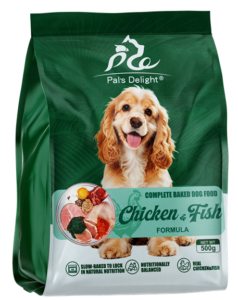 |
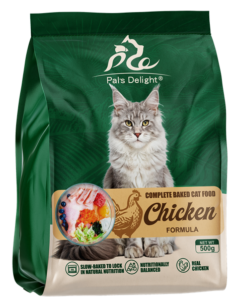 |
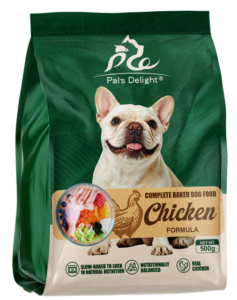 |
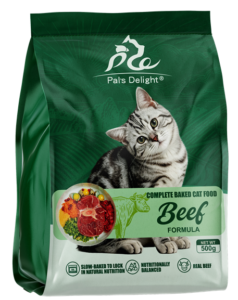
Our baked food range includes five recipes developed separately for cats and dogs.
Complete Baked Cat Food
· Chicken Formula
· Beef Formula
The product information for our cat food range lists guaranteed-analysis minimums of 40% crude protein and 17% crude fat.
Complete Baked Dog Food
· Chicken Formula
· Chicken & Fish Formula
· Beef & Fish Formula
The corresponding listed minimums for our dog food range are 32% crude protein and 16% crude fat.
These figures represent minimum guarantees, rather than exact measured concentrations in every batch. They also do not describe the entire nutritional profile of the food.
When comparing foods with substantially different moisture contents, percentages may need to be converted to a common dry-matter basis. Always refer to the full nutritional information and feeding instructions on the individual product label.
Introducing a New Daily Food
Use the recommended feeding amount as a starting point and adjust it according to your pet’s body condition, activity level and individual energy requirements.
When changing foods, gradually introduce the new recipe alongside the existing diet. Increase its proportion over several days, allowing additional time if your pet is particularly sensitive to dietary changes.
Fresh drinking water should always be available. If your pet has a medical condition, a history of digestive problems or specific nutritional needs, consult your veterinarian before making a significant dietary change.